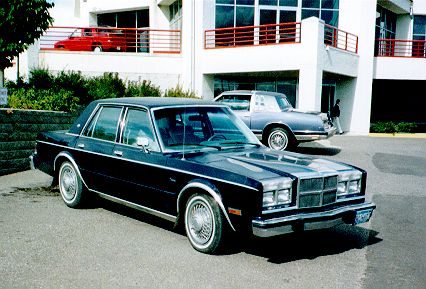
This is a 1985 Dodge Diplomat. The next year this car was put in dealership show floors:


This is a 1988 Oldsmobile Cutlass Ceiara Coupe
While none of these cars are very pretty, they prove a point. A single radical concept can completely shift the direction of the industry. As I look about at the models out now, I see some changes happening. Small cars are making a comeback and I blame Daewoo. Their Lacetti, excuse me, Chevy Aveo has sold more units that all other subcompacts combine. I see rear wheel drive on the rise as well and I blame Mercedes. Their E-class, excuse me, Dodge Charger and Chrysler 300C have reawakened the pleasures of rear wheel propulsion have overcome the practicality of front drive which has been dominating the market for the past 20 some odd years. Front wheel drive is cheaper to manufacture and has better traction in precipitation and is lighter. Rear wheel drive is easier to fix, has better weight distribution ergo better road manners. I remember only 5 or 6 years ago where if you wanted a rear drive passenger car you had to order one from Germany and that shit ain't cheap.
In order for a car to push the path of progress in the automotive world it has to do only one thing: sell a crap load. Now in order for this to happen, a couple things must be attained.
A) It must be affordable. this is not to say cheap, but most people do not spend more than say $30,000 on a new car. Never has there been an epic car that revolutionized the industry that cost more than an island in the Caribbean. Point in case, the Taurus would cost about $20,000 when adjusted for inflation. Not bad for a snazzy midsized 4 door.
B) It must be attractive inside and out. The Mazda protege drove beautifully but was as interesting as a cheese sandwich to look at so it didn't sell amazingly. Mazda fixed that cheese sandwich thing and gave the car a new name and now they are everywhere.
C) It must separate itself from the herd. This is can be done by either dramatically styling a new car or giving it massive performance numbers although that gets expensive very easily so most car makers go for the style thing. That might work for a little while but if the car is a chore to drive or has mechanical problems sales will drop after the first quarter. Take for example the new VW Bug. It came out and sold a whole lot of cars very fast. It was well engineered [Save the problem with the turbo models transmission] and so after the wow factor wore off, people were left with a dependable fun small car.
If all of those criteria are met then sales will soar. Don't believe me? look at every single standard-setting car that has come out in the last 50 years. they have all those qualities and maybe a few more I didn't mention. like reliability. That's a biggie, actually. I'm now making that letter D)


1 comment:
If you say so, Adam Smith II, I believe you.
Post a Comment